
29 April 2026
Download article [PDF]
Feasibility is not what you think it is.
Most mining projects don’t fail because the ore isn’t there.
They fail because what was modelled does not hold when it meets the system it depends on in reality.
The industry still treats feasibility as a stage.
It isn’t.
It is a set of assumptions across geology, engineering, infrastructure, market, ESG and capital that must hold together under real conditions.
They too often don’t.
The gap between:
– what studies define and
– what capital must carry
is where risk accumulates.
That gap is widening.
Projects are increasingly:
– dependent on systems outside their control
– exposed to infrastructure that must perform under stress
– reliant on markets that are not yet fully formed
Feasibility does not guarantee success.
It proves that a model works – under a defined set of assumptions.
The question is not:
“Is this project feasible?”
It is:
“Will it deliver within expectation in the real system it depends on?”
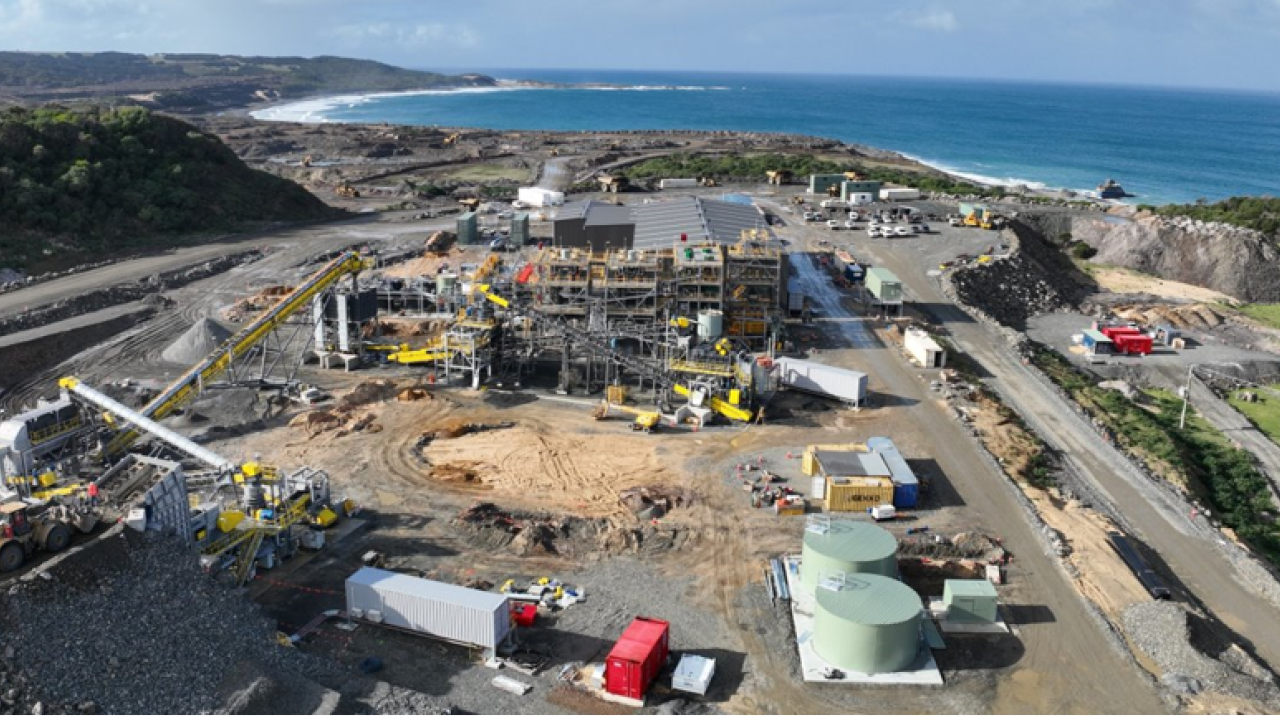
Dolphin Tungsten mine – https://www.tasmaniancountry.com/newspaper/tasmanian-country/g6m-dolphin-tungsten-mine-shift-underground-part-new-deal
Most discussions on mining projects still assume a linear progression:
Resource → Feasibility → FID → Construct → Ramp-up → Profitable Mine
It’s clean.
It’s logical.
It’s incomplete.
Because feasibility is not a single state.
And more importantly: Feasibility does not mean a project can built – or deliver a profitable mine.
Industry estimates suggest that fewer than 1% of exploration projects ultimately reach production, with success rates at early stages often closer to 1 in 1,000 prospects. Failure is not the exception. It is the system.
What “Feasibility” Actually Means
Under the JORC Code, feasibility is not a formally defined stage. There is no prescribed definition of:
- Scoping Study
- Pre-Feasibility Study (PFS)
- Definitive / Bankable Feasibility Study (DFS/BFS)
Instead, the framework defines confidence through outcomes.
To declare an Ore Reserve, a project must demonstrate economic viability after applying modifying factors:
- mining
- metallurgy
- infrastructure
- economic
- legal
- environmental
- social
This is a disclosure threshold. It is not an execution guarantee.
The Industry Shortcut
The industry relies on simplified hierarchies.
Engineering confidence (derived from cost estimation standards such as AACE, not JORC)
- Scoping → ±30–50%
- PFS → ±15–30%
- DFS → ±10–15%
Geological confidence
Mineral Resources (geological confidence): Inferred → Indicated → Measured
Ore Reserves (economic / modifying factors applied): Probable → Proved
These are useful. But they are not integrated systems. They describe confidence in components. They do not describe whether the system holds.
DFS cost estimates are typically presented at ±10–15% accuracy. Yet most large mining projects – often cited at around 70–80% – experience cost or schedule overruns.
What a Feasibility Study Actually Does
A DFS is a closed technical and economic model. It defines:
- what will be built
- how it will operate
- expected cost, recovery and output
It demonstrates a viable system on paper. This is necessary. It is not sufficient.
Market and Offtake
Market assumptions are incorporated within a DFS through:
- price forecasts
- demand outlook
- product specification
Formal off-take agreements are not required to complete a feasibility study.
In established commodities, this is sufficient. In critical minerals, it is not always.
Projects may:
- engage in early off-take discussions
- undertake pilot testing with Original Equipment Manufacturers (OEMs)
- work toward product qualification
These activities can strengthen confidence. But they are not required, not standardised, and not systemically integrated.
Market validation may sit anywhere between:
- assumed
- partially demonstrated
- contractually secured
This variability directly impacts bankability.
What It Assumes
Factors such as:
- infrastructure availability
- power and water access
- permitting timelines
- logistics and export pathways are considered within a DFS.
But their delivery, timing and reliability are not controlled by the project. They are treated as inputs.
In reality, they are dependencies.
Where Projects Fail
Not in the ground. Not in the models.
But in the interaction between disciplines — where models meet real-world systems.
The Feasibility Corridor
The critical space sits between:
Study completion → Capital deployment
Studies are relied upon throughout project progression. Final Investment Decision (FID) is the point at which capital is formally committed for construction.
This is where model certainty meets system reality.
System Constraints (Observed)
These dynamics are already visible.
Infrastructure Constraint – Cloncurry-Mt Isa
Projects have:
- defined resources and reserves
- completed studies
- technically viable pathways
Yet development stalls due to:
- power cost and availability
- distance to processing and export infrastructure
- logistics to port
- water reliability
These deposits are feasible at asset level. These constraints sit outside individual project control and require coordinated system investment.
Capital Fragility – Dolphin Tungsten
A technically viable restart with defined resource and processing. Yet reliant on structured financial support. The issue is not capability. It is financial resilience under real conditions – with development sequencing already diverging from the feasibility plan.
Operational Reality – Ernest Henry
A mature, operating mine. Yet external factors such as extreme rainfall disrupt access to ore even where infrastructure, processing and capital are already in place. Feasibility does not eliminate operational variability.
Market Constraint – Kemerton Lithium
The plant operates. The process works. Capacity is idled. The constraint is margin. Lithium hydroxide prices have fallen significantly from 2022 highs. The system functions. The economics do not hold. Revenue does not support full utilisation.
Social / Political Constraint – Sunday Creek (Victoria)
An advanced exploration project constrained not by geology, but by community and regulatory resistance. The exploration development pathway has shifted to underground access, increasing cost and complexity before a mineral resource estimate has been announced, pivoting the feasibility pathway and increasing costs. Community is addressed in feasibility. Policy and politics often are not.
Policy Constraint – Uranium (Queensland)
Resources exist. Projects may be technically and economically viable. They are not executable. Here, feasibility is irrelevant. Policy overrides geology, engineering and economics.
Decorative vs Deliverable Feasibility
This distinction is rarely made explicit.
Decorative feasibility:
- meets disclosure requirements
- technically justified
- economically positive on paper
Deliverable feasibility:
delivers within expectation
Feasibility is either decorative, or it delivers within expectation.
Projects do not fail because they do not produce. They fail because what is delivered diverges from expectation across:
- tonnes
- grade
- recovery
- time
- cost
From Feasibility to Delivery
Feasibility begins to fail in the feasibility corridor – when reality and expectation diverge.
That divergence is not random. It can be identified, mapped and aligned within tolerances early. Left unaddressed, it compounds and becomes visible on the balance sheet during ramp-up.
By that point, options are limited.
Why This Matters Now
The gap is widening. Projects increasingly:
- sit outside established infrastructure
- depend on systems not yet built
- require downstream integration
- operate across complex policy environments
Feasibility is no longer a project question.
It is a system condition.
The Implication for Capital
Capital does not fund models. It funds exposure to:
- execution risk
- timing risk
- dependency risk
- downside scenarios
A project can be technically feasible and still be unfinanceable.
The question is no longer: “Is this project feasible?”
It is: “Will this project deliver within expectation in the system it depends on?”
Conclusion
Studies define what can be mined under assumptions.
Capital carries the risk of whether those assumptions hold.
Feasibility does not guarantee success.
References:
Feasibility, JORC and Modifying Factors
JORC Code (2012 Edition) – Australasian Code for Reporting of Exploration Results, Mineral Resources and Ore Reserves https://www.jorc.org/docs/JORC_code_2012.pdf
CRIRSCO International Reporting Template (aligned global standard) https://crirsco.com/docs/CRIRSCO_International_Reporting_Template_2019.pdf
Project Success Rates / Discovery to Production
Schodde, R. (MinEx Consulting) – “Long-term trends in discovery and production” https://www.minexconsulting.com/publications
S&P Global Market Intelligence – “The odds of finding and developing a mine” https://www.spglobal.com/marketintelligence/en/news-insights
Cost Accuracy and Engineering Confidence
AACE International – Cost Estimate Classification System (Recommended Practice No. 18R-97) https://web.aacei.org/resources/publications (±30-50%, ±15-30%, ±10-15% ranges)
Cost Overruns in Mining Projects
McKinsey & Company – “Productivity in mining operations: Reversing the downward trend” https://www.mckinsey.com/industries/metals-and-mining/our-insights
EY – “Why mining megaprojects fail to deliver” https://www.ey.com/en_gl/mining-metals (~70-80% cost/schedule overrun context)
Offtake, Market and Critical Minerals Risk
IEA – Critical Minerals Market Review https://www.iea.org/reports/critical-minerals-market-review
Benchmark Mineral Intelligence (market qualification / supply chain constraints) https://www.benchmarkminerals.com
Infrastructure Constraint – Cloncurry / Mt Isa Region
Queensland Government – North West Minerals Province / Mt Isa region infrastructure and development https://www.resources.qld.gov.au
Infrastructure Australia – Northern Australia / resource corridor constraints https://www.infrastructureaustralia.gov.au
Capital Fragility – Dolphin Tungsten (EQ Resources)
EQ Resources – ASX Announcements / Investor Presentations https://www.eqresources.com.au
Operational Disruption – Ernest Henry (Glencore)
Glencore – Operational Updates and Production Report https://www.glencore.com (rainfall / operational disruption context)
Market Constraint – Kemerton Lithium (Albemarle / SQM)
Company announcements and earnings reports https://www.albemarle.co https://www.sqm.com
Lithium pricing data (Fastmarkets / Benchmark) https://www.fastmarkets.com
Social / Regulatory Constraint – Sunday Creek (Victoria)
Southern Cross Gold – ASX Announcement https://www.southerncrossgold.com.au
Victorian Government – Mining approvals and regulatory framework https://earthresources.vic.gov.au
Policy Constraint – Uranium (Queensland)
Queensland Government – Uranium mining policy https://www.resources.qld.gov.au